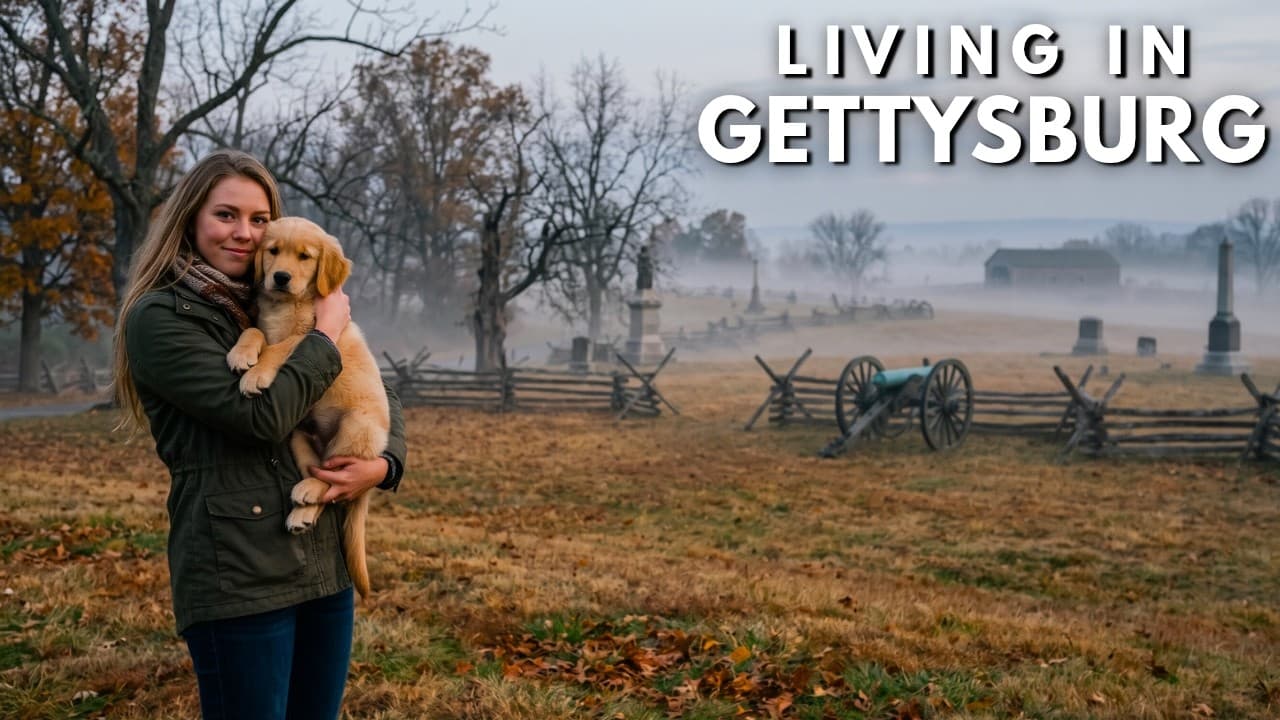
Gettysburg, Pennsylvania is a town of about 8,000 people built on top of the deadliest three days in American history. Nearly every road out of the borough runs into a national park where roughly 50,000 soldiers were killed, wounded or captured in July 1863, and every October the same streets fill with candlelit walking tours selling the idea that some of those soldiers never left. Living in America's most haunted battlefield means living with both: the solemn ground the National Park Service protects by day and the ghost industry that keeps the lights on after dark.
This guide takes the Happy Living film on everyday life in Gettysburg and adds what a visitor needs to know: what happened here, why the town became the capital of American ghost tourism, and how to walk the field with respect.
Watch the Film First
The film spends ordinary days in and around the borough rather than racing through the famous stops. It follows morning joggers on the park roads, shopkeepers on Steinwehr Avenue whose businesses depend on history, Gettysburg College students who walk past a former Civil War field hospital on the way to class, and the guides who take visitors out with lanterns once the sun sets over Seminary Ridge. The question underneath is simple: what does it do to a community to live permanently inside someone else's memorial?
Three Days That Made the Town
The Battle of Gettysburg was never supposed to happen here. In late June 1863, Robert E. Lee's Army of Northern Virginia pushed into Pennsylvania, and the Union Army of the Potomac under George Meade moved north to find it. The two armies collided on July 1 on the ridges northwest of a market town that happened to sit at the junction of ten roads. The Union line was driven back through the streets on the first day, held the hills south of town on the second, and on the afternoon of July 3 broke the Confederate assault remembered as Pickett's Charge, roughly 12,000 men walking close to a mile across open farmland into cannon and rifle fire on Cemetery Ridge. Casualties across both armies came to roughly 50,000, the most of any battle in the war, and Lee's retreat on July 4 marked the furthest north his army would reach.
Then the armies left, and the people of Gettysburg, about 2,400 of them at the time, were left with the wreckage. Thousands of dead men and horses lay in the fields in July heat, and churches, barns, the college's Pennsylvania Hall and the Lutheran seminary became hospitals. Shallow field graves were the only option, and a local attorney named David Wills pushed for a proper cemetery on Cemetery Hill. At its dedication on November 19, 1863, the featured speaker, Edward Everett, talked for about two hours. Abraham Lincoln followed with roughly 270 words that took around two minutes, and the Gettysburg Address became the most famous speech in American history. The Soldiers' National Cemetery, where about 3,500 Union dead lie, many of them unknown, is still the quiet heart of the park. The Confederate dead were exhumed in the 1870s and carried south.
Those hasty field burials are the historical root of the ghost stories. Farmers turned up bones for decades afterward, and the town's buildings carry the scars in plain view. The south wall of the Farnsworth House on Baltimore Street holds more than a hundred bullet holes from the Confederate sharpshooters who used its attic, and a few doors down, 20-year-old Mary Virginia Wade, known as Jennie, was killed by a stray bullet while kneading bread dough in her sister's kitchen on July 3, the only civilian to die in the battle. Both houses are museums now, and both run ghost tours.
How Gettysburg Became the Capital of American Ghost Tourism
For most of the twentieth century Gettysburg sold history, not hauntings. Veterans held reunions here into the 1930s, and Dwight Eisenhower retired to a farm beside the battlefield. The paranormal business arrived in the early 1990s, when Mark Nesbitt, a former park ranger, published "Ghosts of Gettysburg," a collection of stories gathered from guides, residents and visitors. The book grew into a series, and in 1994 Nesbitt launched the first candlelit walking tour of the town. Dozens of competitors followed, and today a visitor on Baltimore Street in October can choose between costumed guides with lanterns, paranormal investigators carrying meters and recorders, and theater performances staged in the old inns.
The stories have a geography. Devil's Den, the boulder field below Little Round Top where sharpshooters fought at close range, is where visitors most often report camera batteries dying and the smell of gunpowder. Sachs Covered Bridge, a red 1854 bridge southwest of town that the retreating Confederate army crossed, carries a legend that three deserters were hanged from its beams and draws amateur investigators every weekend. Pennsylvania Hall at Gettysburg College comes with a well-worn tale of an elevator that opened onto a basement full of surgeons and wounded men. None of this is proven, and the park service stays firmly neutral, but the economy around it is very real. Ghost tours run nightly from spring to late autumn, and October has quietly become the town's second peak season after the July anniversary, proof that the holiday which began as Samhain in Ireland has found one of its most profitable American homes here. If you enjoy a town that has turned old death into a Halloween economy, you will recognize the same alchemy in Transylvania, where the Dracula business sits on top of real medieval history, and at the Tower of London, which turns centuries of executions into evening tours.
What the film shows well is that residents hold these two Gettysburgs in balance with practiced grace. Licensed Battlefield Guides, a program the park has run since 1915, pass a notoriously difficult exam and will not talk about ghosts on the clock; the same guide may lead a lantern tour for a private company that night. Shopkeepers who sell plastic skulls on Steinwehr Avenue line the streets for the Remembrance Day parade and the Dedication Day ceremony each November. The battlefield itself is the town's park: people walk dogs on the auto tour road, cycle Confederate Avenue at dawn and sled the hills after a snowfall. The annual reenactment each July happens on private farmland outside the park boundary, since mock battles are not allowed on the protected ground. The arrangement works because nobody in Gettysburg is pretending the dead are not here; they simply disagree, cheerfully, about whether the dead are still walking.
What It's Really Like to Visit
Gettysburg is a small, walkable town with a very large park wrapped around it, and that shapes where you sleep and how you move.
- Best time to go: Late September through October for crisp weather, the apple harvest in the surrounding Adams County orchards and the full ghost tour calendar. The first days of July bring the anniversary, living history camps and the reenactment, along with the biggest crowds and the worst humidity. Spring is green and quiet; winter is cold and nearly empty.
- Getting there: You will need a car. Gettysburg has no passenger rail and sits roughly 85 miles from Washington, DC, 55 miles from Baltimore and 40 miles from Harrisburg; BWI and Harrisburg are the closest airports. US Route 30, the old Lincoln Highway, runs straight through Lincoln Square.
- Where to base: Stay in the borough so you can walk to dinner and the ghost tours. Lincoln Square and Baltimore Street have the historic inns and bed and breakfasts; Steinwehr Avenue is the strip closest to the park entrance and the cemetery. Chain hotels cluster on the edges of town along Routes 30 and 15.
- Costs: The battlefield itself is free; you can drive the roughly 24-mile auto tour and climb Little Round Top without paying anything. The Museum and Visitor Center charges roughly 20 US dollars for adults for the film, the Cyclorama painting of Pickett's Charge and the galleries. A Licensed Battlefield Guide riding in your own car costs roughly a hundred dollars for two hours and is the best money you will spend here. Ghost tours run roughly 15 to 30 dollars per person, and in-town rooms in peak months can top 200 dollars a night.
- Etiquette on hallowed ground: Do not climb on monuments or cannons, do not pocket rocks or relics, and leave the metal detector at home; relic hunting on the park is a federal offense. Keep voices down in the cemetery, and note that drones are banned. Park roads close at 10 pm from April to October and at 6 pm the rest of the year, so the battlefield is not a place for a midnight ghost hunt.
- Ghost tour tips: Book ahead for October weekends, which sell out. Most tours are 60 to 90 minutes of walking through town, so wear real shoes and bring a layer. The candlelit walks are mostly storytelling and local history, while the investigation tours and overnight sessions in the old houses are for people who want to hold the equipment. Children are welcome on most walking tours; overnights vary.
- Weather: July highs sit in the mid to upper 80s Fahrenheit with heavy humidity and afternoon thunderstorms. October days are typically in the 60s and nights drop toward 40, so the lantern tours get cold. Winter brings occasional snow and wind on the exposed ridges.
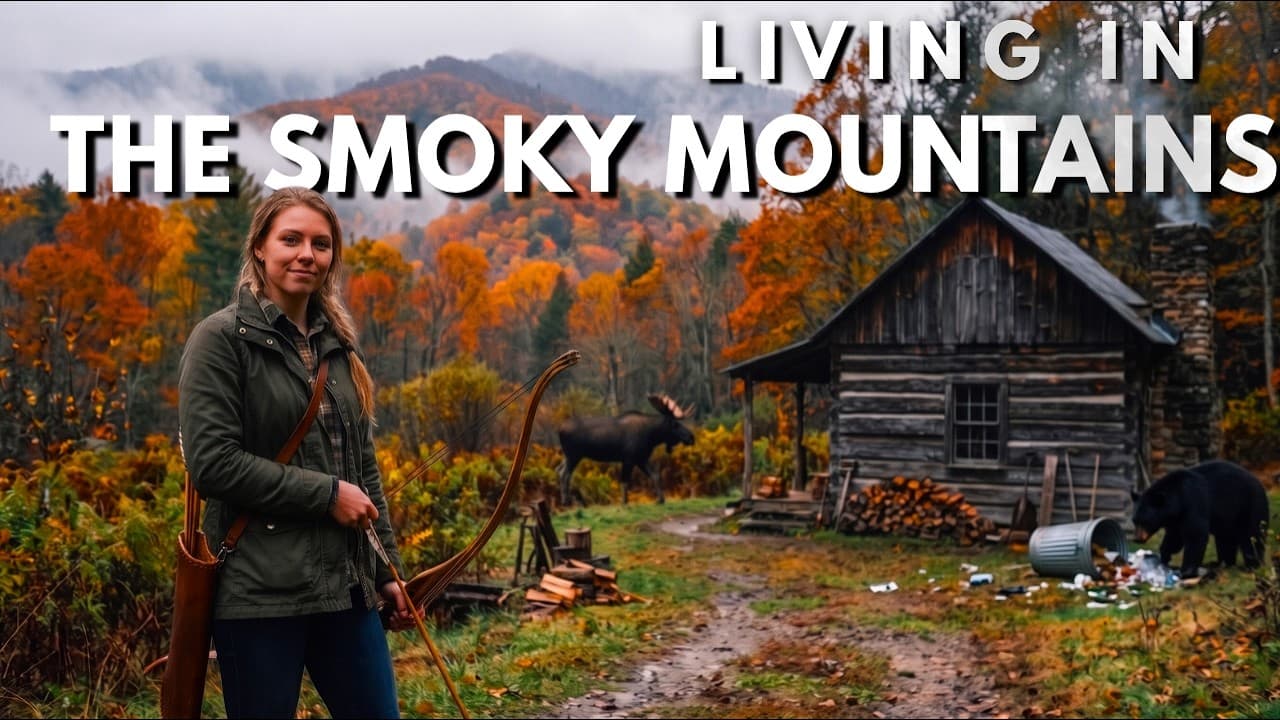
If you are driving south afterward, the same Appalachian ridgeline runs down into our Smoky Mountains guide.
What to Pack for Gettysburg
The park covers roughly 6,000 acres of ridges, boulders and open fields, best understood on foot, so footwear matters more than anything else in your bag.
Affiliate picks, not a shopping checklist. Use what you own first. Check the listing's model, size, seller and current availability before purchasing.
Ghosts of Gettysburg (book series)
Mark Nesbitt started the Gettysburg ghost tour industry with this series, and reading a volume before you arrive makes the lantern walks far richer.
Gettysburg Civil War History Book
A solid narrative history of the three-day battle turns the monuments and ridges into a story you can follow on the ground.

Osprey Farpoint 40
Perfect for a day walking the battlefield, fits everything without slowing you down.

Merrell Moab 2 Waterproof Hiking Boots
The battlefield covers miles of terrain, good boots make the difference. Waterproof uppers matter on the wet grass of Little Round Top at dawn.
FAQ
Is Gettysburg really the most haunted place in America?
There is no way to measure that, and the National Park Service takes no position on hauntings. What is true is that Gettysburg has more ghost tours per resident than almost anywhere in the country, and that its stories are rooted in documented events like the field burials and the death of Jennie Wade. Treat the tours as folklore and local history with a theatrical edge and you will have a good night either way.
Is the Gettysburg battlefield free to visit?
Yes. Gettysburg National Military Park charges no entrance fee, and you can drive the auto tour, walk the trails and visit the Soldiers' National Cemetery at no cost. Fees apply only for the Museum and Visitor Center, Licensed Battlefield Guides, and privately run attractions in town such as the Jennie Wade House and the Shriver House.
How many days do I need in Gettysburg?
Two full days is right for most people. Spend the first on the battlefield with a guide or the auto tour, plus the cemetery and the Visitor Center. Keep the second for the town, the historic houses, the David Wills House where Lincoln finished his speech, and a ghost tour after dark. History enthusiasts can easily fill four or five days.
Can I do a ghost tour on the actual battlefield at night?
Not inside the national park, which closes at 10 pm in summer and 6 pm in winter. The walking tours cover the town, where the first day's fighting passed through and the field hospitals stood, and some companies run investigations in privately owned historic houses or at Sachs Covered Bridge, which is county property outside the park boundary.
Watch More from Happy Living
Gettysburg is one stop in a longer series on how people actually live in the places the world thinks it knows. Browse the full Happy Living film collection for Transylvania at Halloween, the Smoky Mountains and Switzerland, or subscribe on YouTube to catch each new film the week it is released. The journal has a companion guide for every destination.